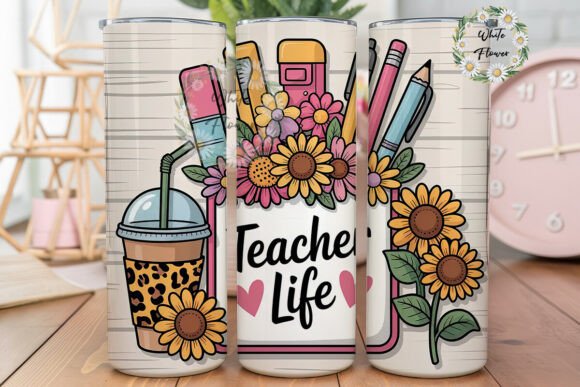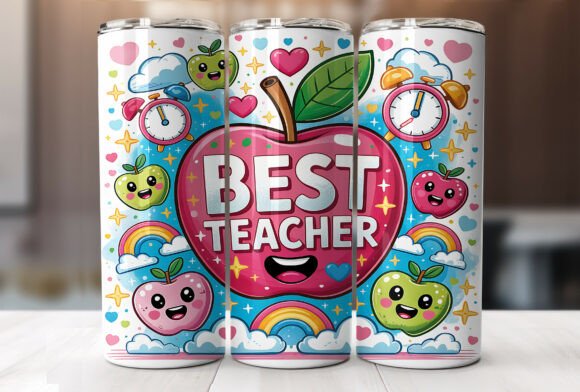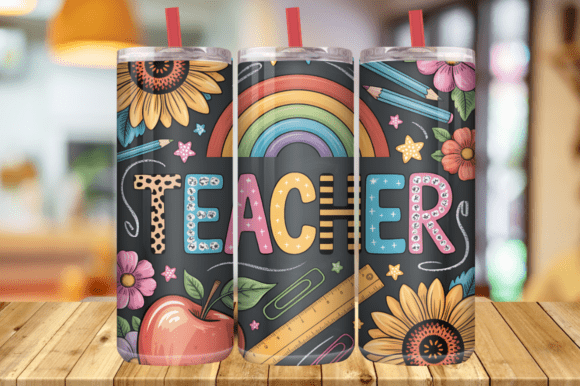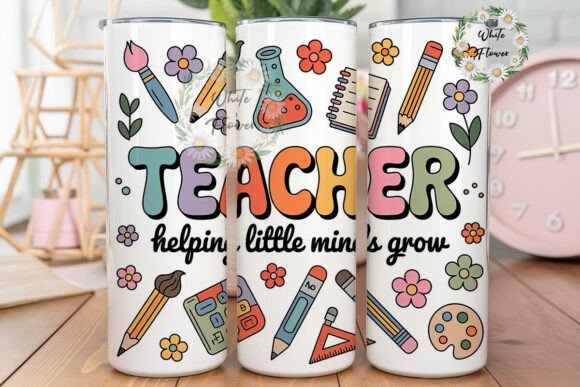
Reviewing the Teacher Valentine Tumbler Wrap
As a designer who spends more time staring at stitch simulations than I care to admit, I have learned that not every digital asset translates well to physical media. When I first encountered the Teacher Valentine s 20oz Tumbler Wrap, my initial reaction was one of cautious curiosity. The listing describes it under the category of Tumbler Wraps and classifies it as Graphics, which immediately signals that this is a print-ready visual asset rather than a native machine embroidery file. However, for those of us in the craft business, the line between a printed wrap and an embroidered design is often blurred by customer demand for personalized, high-value items.
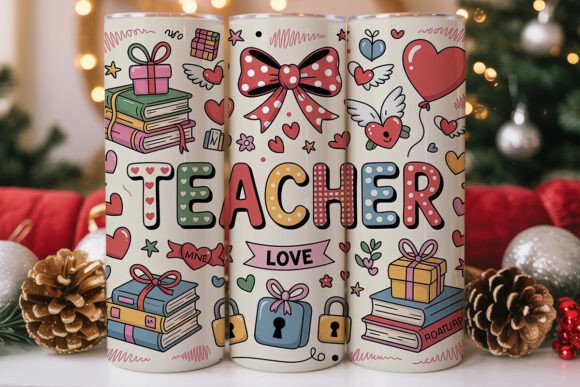
Your download will include – 1 Straight PNG file – 1 Tapered PNG file Size 9.3″ x 8.2″ Resolution is 300 DPI – Watermark and Background will not be on your downloaded file. – This listing is a PNG Dig. These specifications are critical. A resolution of 300 DPI is the gold standard for crisp printing, ensuring that when this design is sublimated onto a 20oz tumbler, the edges remain sharp and the colors vibrant. But how does this translate if you are an embroidery designer looking to adapt this aesthetic for a stitched project? Let’s dive into the practical reality of using this asset in a real-world scenario.
First Impressions and Visual Mood
The visual personality of this design leans heavily into the affectionate, appreciative vibe typical of holiday embroidery. It captures that specific niche of teacher appreciation gifts, where warmth and professionalism meet. The layout, sized at 9.3 inches by 8.2 inches, is substantial. In the world of machine embroidery design, this is a large footprint. If you were to digitize this concept for a sweatshirt or a tote bag, you would be looking at a significant stitch count. The mood is inviting, perfect for a handmade product that needs to convey gratitude without being overly sentimental or childish.
For an Etsy seller or small shop owner, the appeal lies in the versatility of the theme. While the file itself is a graphic for tumblers, the compositional elements can inspire a broader range of custom apparel. Imagine taking the core motifs from this wrap and adapting them into an applique design for a canvas tote. The straight PNG file offers a clean, unwarped view of the artwork, allowing you to trace or reference the shapes accurately for digitizing. The tapered PNG, meanwhile, shows you exactly how the design interacts with the curve of a cylinder, providing valuable insight into how visual weight should be distributed when working on curved surfaces like caps or rounded pillow covers.
Real-World Application: Beyond the Tumbler
Let’s consider a realistic case study. You run a boutique specializing in personalized gifts for educators. A client approaches you for a bulk order of Valentine’s Day presents. They want tumblers, yes, but they also want matching embroidered aprons for a school staff luncheon. Here is where understanding the source material becomes vital. Since the Teacher Valentine s 20oz Tumbler Wrap is a high-resolution graphic, you can use it as a reference to create a complementary embroidery file.
When translating this graphic into a stitch file for an apron or a kitchen towel, you must consider fabric texture. Aprons are often made of cotton or canvas, which handle fill stitch and satin stitch well. However, the intricate details visible in the 300 DPI PNG might need simplification. Tiny lettering, which looks crisp in print, can become a tangled mess of thread if the stitch density is too high or if the font size is reduced below a quarter-inch. I always advise testing the design on scrap fabric first. Check thread color contrast against the base material. If the original graphic uses subtle pastels, you may need to adjust your thread colors to ensure visibility on darker fabrics.
For those focusing strictly on the tumbler aspect, the value is in the ease of use. The tapered file eliminates the guesswork of wrapping a flat image around a cone-shaped object. This ensures that the final product looks professional, with no distorted logos or cut-off text. For a craft business, this reliability translates directly to customer trust. A flawless print job enhances the perceived value of the finished product, making it feel like a premium boutique item rather than a DIY experiment.
Navigating Technical Constraints
While the graphic is optimized for printing, embroiderers must exercise caution if attempting to replicate this look. The size—9.3 inches by 8.2 inches—is too large for standard home embroidery hoops, which typically max out at 5x7 or 6x10 inches. To stitch a design of this magnitude, you would need a multi-needle commercial machine or a large-format single needle machine. Alternatively, you could break the design into sections for hooping and stitching, but this requires precise alignment skills to avoid visible seams.
Another consideration is the substrate. If you are applying this aesthetic to stretchy fabric, such as a baby onesie or a fitted t-shirt, proper stabilizer is non-negotiable. Without adequate backing, the tension from the stitches can cause puckering, ruining the smooth look of the design. For textured fabrics like towels or fleece, you might need a topping to prevent the stitches from sinking into the pile. Always inspect small details in the original PNG. If the graphic includes fine lines or gradients, these will need to be converted into running stitch or simplified fill patterns to maintain clarity after stitching.
It is also crucial to verify licensing before selling finished items. The description notes this is a PNG digital file, but it does not explicitly state commercial usage rights for derivative embroidery works. As a professional, I always recommend confirming whether the license allows for the creation of new digitized files based on the graphic. If you are unsure, reach out to the creator. Protecting your business from intellectual property issues is just as important as mastering your stitch techniques.
Enhancing Brand Consistency and Value
Integrating assets like the Teacher Valentine s 20oz Tumbler Wrap into your workflow can significantly boost your brand consistency. By using the same visual themes across different product types—printed tumblers, embroidered totes, and perhaps even printable mockups for your online store—you create a cohesive collection. This recognition helps buyers engage with your brand, seeing you as a thoughtful designer rather than just a vendor of random items.
For digital product sellers, this file serves as an excellent base for creating promotional materials. You can use the straight PNG to generate high-quality previews for your Etsy listings, showing customers exactly what the design looks like without the distraction of watermarks. These design assets are invaluable for marketing, allowing you to showcase the potential of your personalized products before a single thread is stitched or ink is printed.
In conclusion, while this product is technically a graphic for sublimation, its value to the embroidery community lies in its inspirational potential and professional presentation. Whether you are printing it directly on a tumbler or using it as a blueprint for a complex embroidered patch, the attention to detail in the source file sets a high standard. Just remember to respect the technical limitations of your machinery, choose your fabrics wisely, and always prioritize quality control. The result is a finished product that not only meets but exceeds customer expectations, securing your reputation as a skilled and reliable maker.